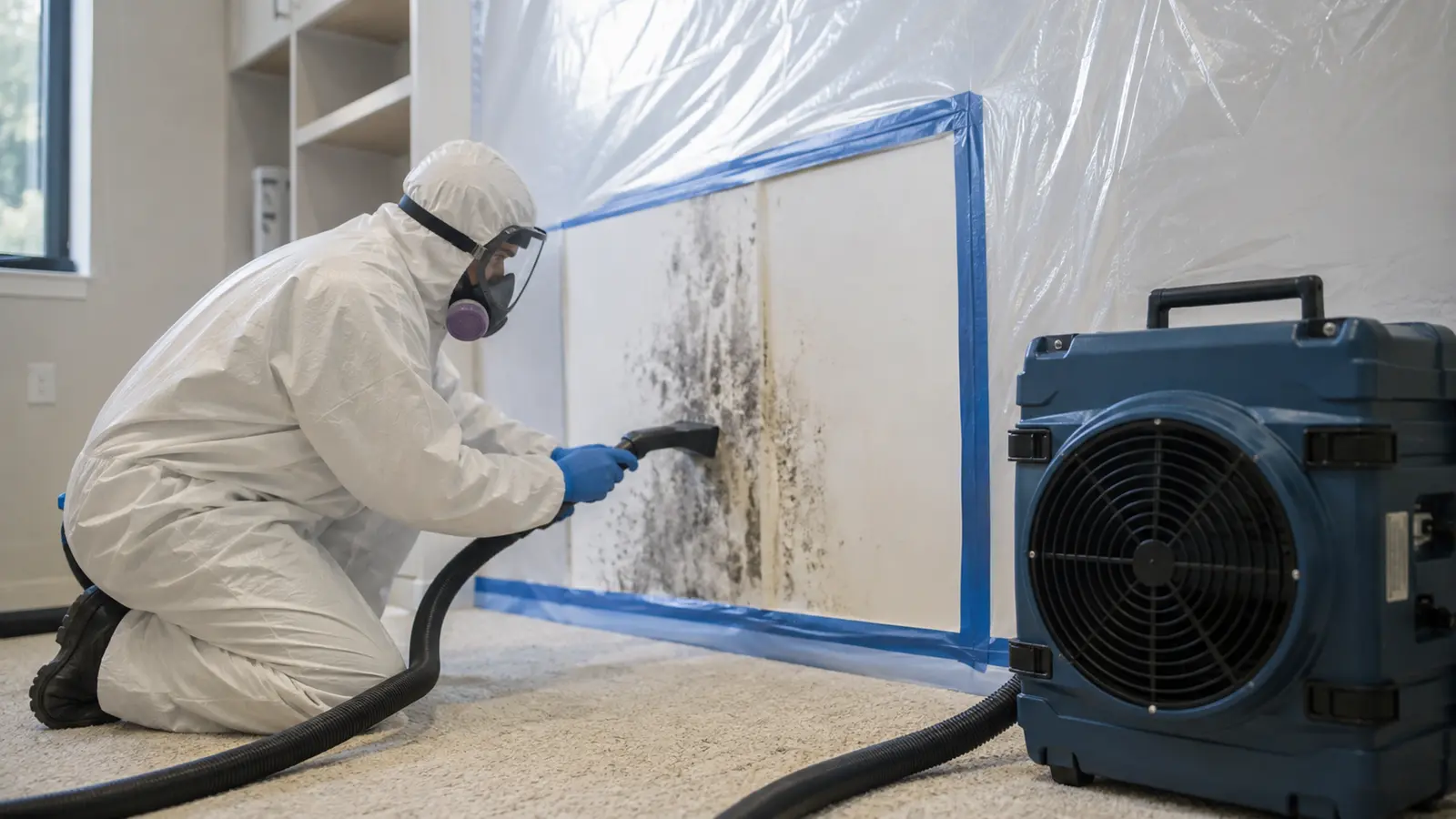
Mold remediation is the actual removal-and-treatment work that happens after an inspection confirms a problem: sealing off the affected area, removing materials that can't be cleaned, treating the remaining structure with an antimicrobial, and drying the space back out so mold can't regrow. "Remediation" is the correct industry term — no company can promise 100% mold "removal" in the sense of eliminating every spore, because mold spores exist naturally in outdoor and indoor air everywhere. The goal is bringing your home back to what's called Condition 1: a normal, unremarkable fungal ecology matching outdoor background levels.
This page covers general residential remediation. If your mold is concentrated in one specific area — crawl space, attic, basement, or HVAC — those pages go into more targeted detail on that environment's specific causes and fixes.
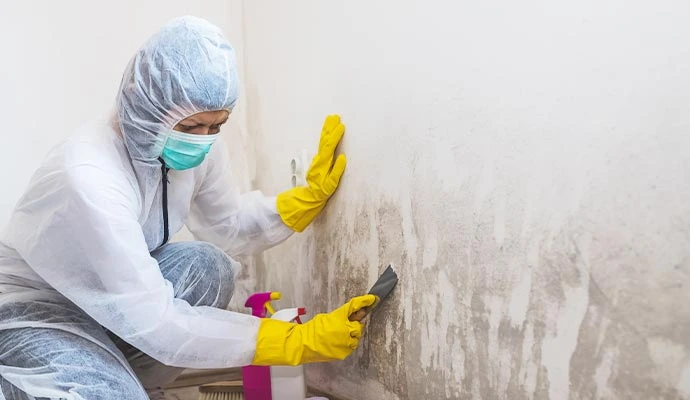
Physical barriers and negative air pressure isolate the work area so spores don't spread to the rest of the house during removal.
Porous materials that can't be fully cleaned — drywall, insulation, carpet padding — are removed and bagged for disposal; non-porous and semi-porous materials are cleaned instead of replaced wherever possible to control cost.
Air scrubbers run continuously during work, and remaining surfaces are treated with an EPA-registered antimicrobial.
The area is dried to target moisture levels and, on request, independently re-tested to confirm the remediation was successful before we close out the job.
Every job is different, but here's what Raleigh-area homeowners typically pay. For a full cost breakdown across every service and an interactive calculator, see our complete mold remediation cost guide.
| Scenario | Typical Range | Notes |
|---|---|---|
| Small contained area (<10 sq ft) | $450 – $1,200 | Single bathroom ceiling, small closet, isolated drywall section. |
| Moderate area (10–100 sq ft) | $1,200 – $3,500 | One full room or multiple smaller spots. |
| Extensive/whole-area remediation | $3,500 – $8,000+ | Multiple rooms, crawl space, or structural involvement. |
| Moisture source repair (if needed) | Varies | Plumbing, roof, or grading fixes are quoted separately by a licensed trade. |
Start with a professional inspection. We'll tell you exactly what's going on — no pressure, no upsell.