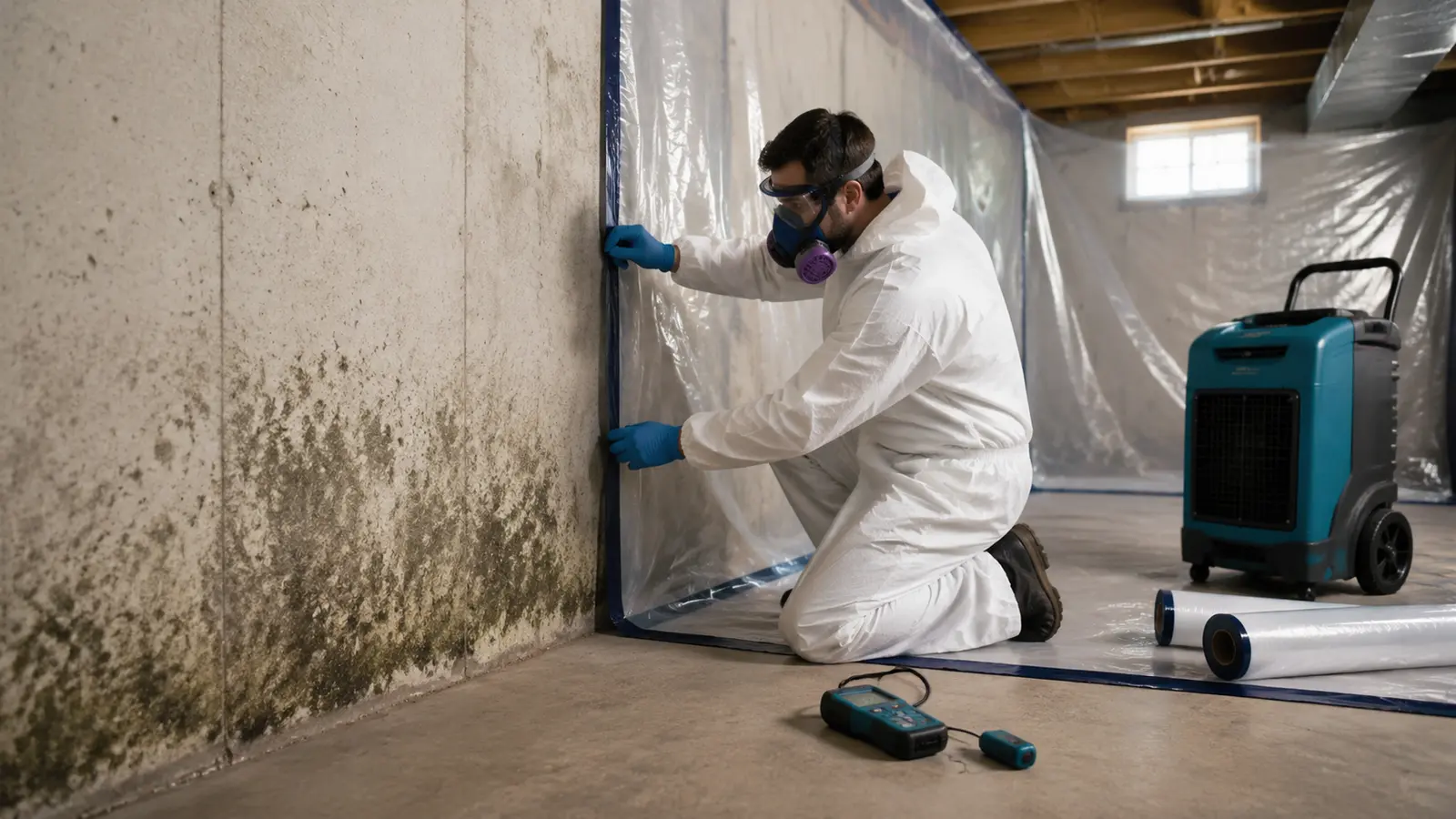
Fewer Raleigh homes have full basements compared to crawl-space construction, but the ones that do share a common pattern: mold along the base of walls, behind finished drywall, or on stored belongings, tracing back to grading issues, foundation cracks, or condensation from an unconditioned space. Because basements are often finished living space or storage for anything, the stakes of getting the fix wrong (treating mold without addressing water intrusion) are higher than in a crawl space.
We treat basement mold jobs as two connected problems from day one: what needs remediating now, and what water-management fix — interior drainage, exterior grading, foundation crack sealing, or a sump pump — prevents it from returning.
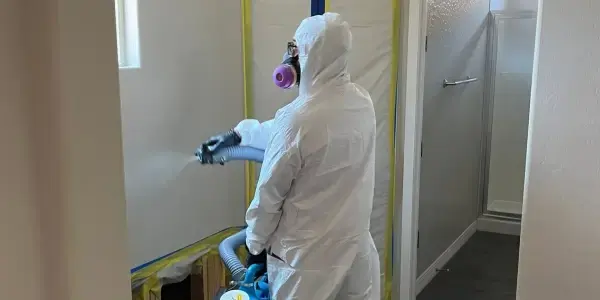
We identify whether the source is exterior (grading, gutters, foundation cracks) or interior (condensation, poor ventilation, plumbing) — this determines the entire plan.
Affected drywall, insulation, and framing are removed or treated; belongings are assessed and cleaned or flagged for disposal.
Depending on the source: exterior grading/drainage correction, foundation crack injection, interior drain tile with sump pump, or a combination.
A follow-up moisture check (and heavy-rain observation period, where practical) confirms the water intrusion has actually stopped before we close out the job.
Every job is different, but here's what Raleigh-area homeowners typically pay. For a full cost breakdown across every service and an interactive calculator, see our complete mold remediation cost guide.
| Scenario | Typical Range | Notes |
|---|---|---|
| Basement mold remediation only | $1,000 – $3,500 | Assumes moisture source is already resolved or minor. |
| Exterior grading/drainage correction | $1,000 – $4,000 | Addresses surface water directed away from the foundation. |
| Interior drain tile + sump pump system | $3,000 – $8,000 | For active water intrusion through the foundation. |
| Foundation crack injection (per crack) | $400 – $1,200 | Epoxy or polyurethane injection for cracked foundation walls. |
Start with a professional inspection. We'll tell you exactly what's going on — no pressure, no upsell.